What to look at in soft baby toys for 6 to 12 months
Between six and twelve months a baby's hands stop being decorative. They grasp, they transfer an object from one side to the other, and crucially they learn to let go on purpose. Almost every toy worth owning at this age is something to pick up, something to put down, or something to put other things inside. Our two fabric sets cover all three.
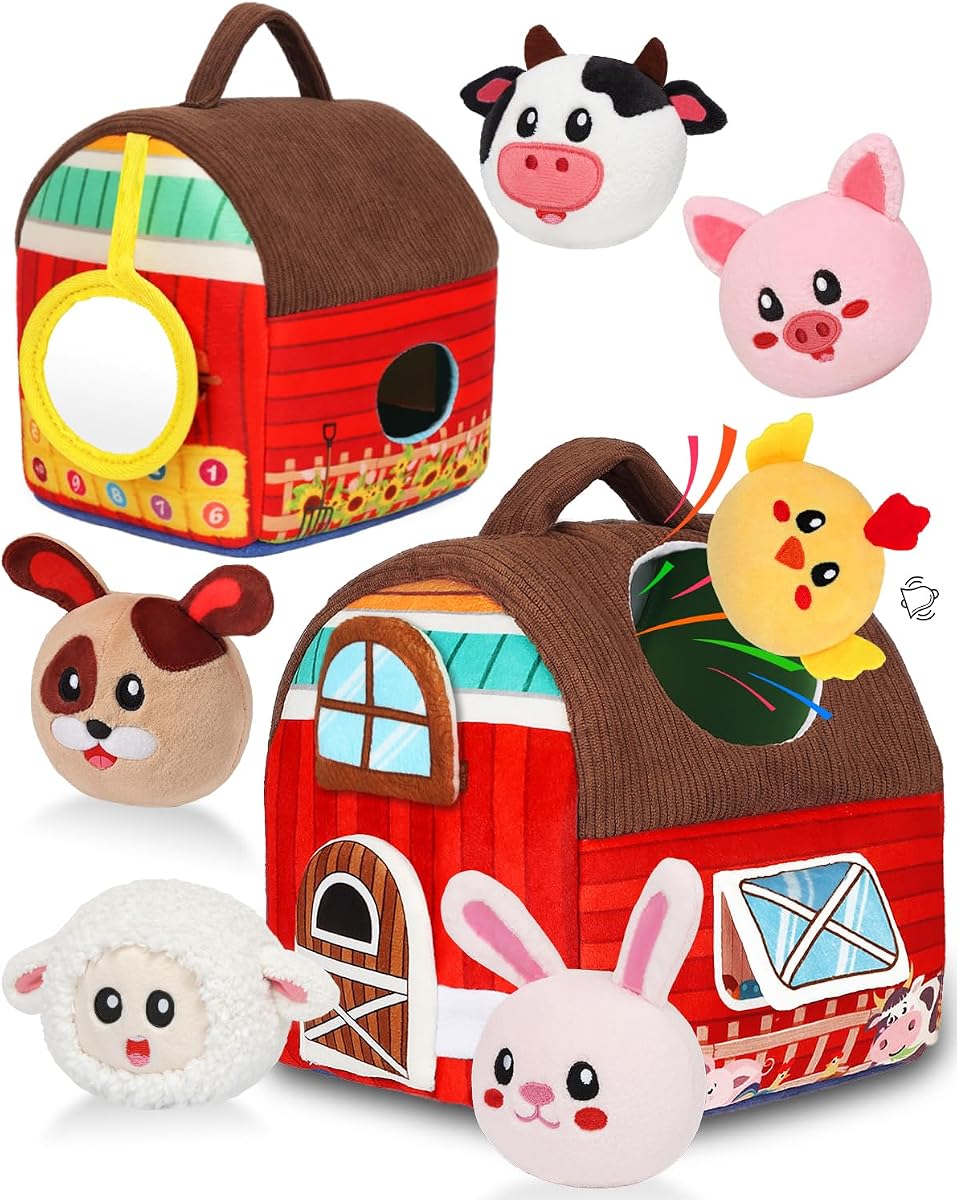
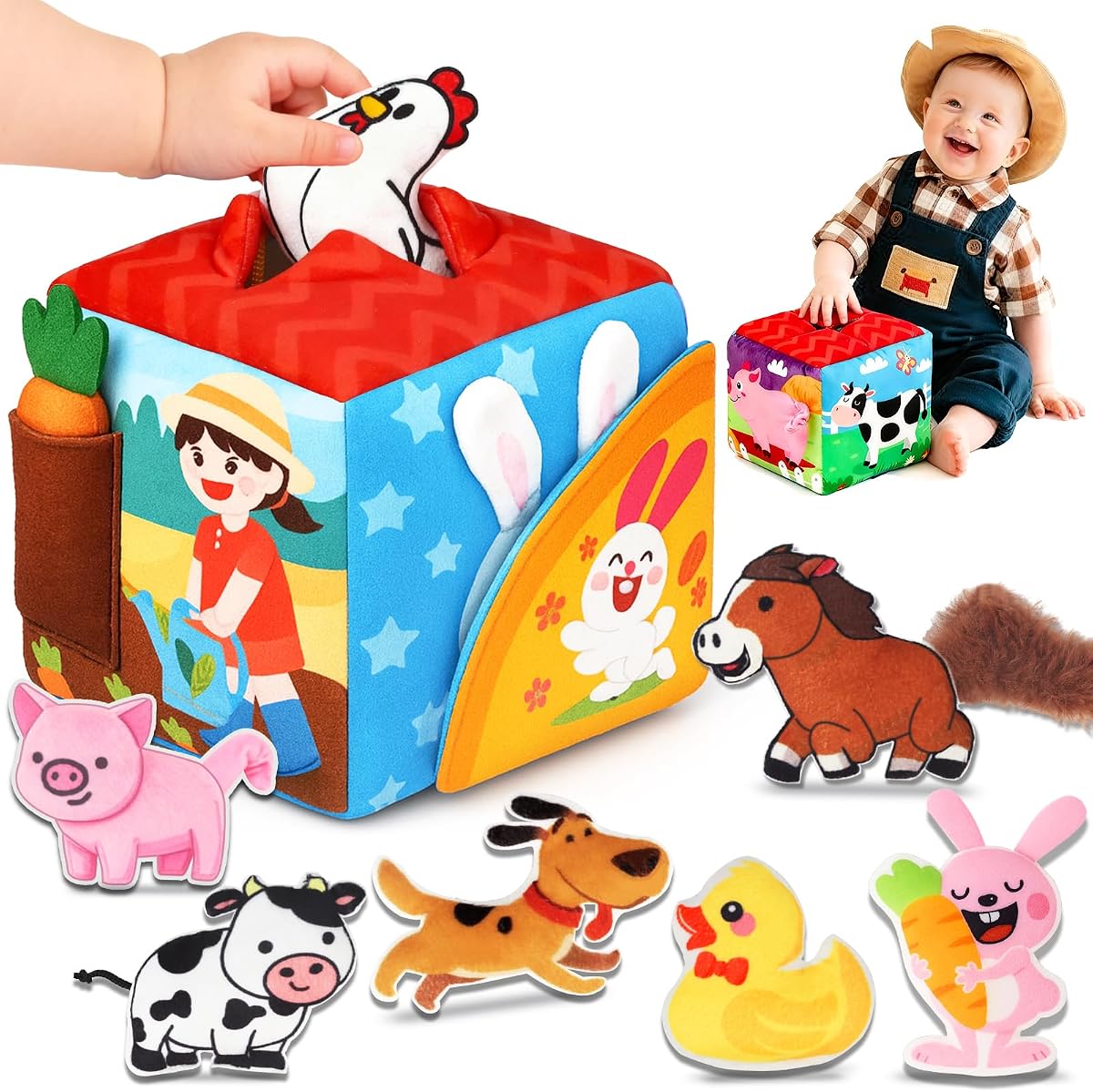
The barn is the larger of the two and comes with a play mat, which makes it the better choice if tummy time is still part of the day. Six animals live inside it, each in a different material, and two openings let a baby fill and empty the barn without help. The sensory box is smaller, cheaper and more portable: eight objects in a cube that stands up on its own, with a mirror on one face, crinkle paper behind another and a carrot that pulls out of a pocket.
Both are made to be washed, which matters more than it sounds. Everything at this age goes in a mouth, and a toy that cannot survive a cool cycle stops being used within a month. Neither set has small parts, neither needs batteries, and both fold or squash flat enough for a changing bag.
Soft montessori baby toys for 6-12 months
Between six and twelve months old a baby's hands stop being decorative. They grasp, they transfer an object from one side to the other, and they learn to let go on purpose. Almost every toy worth owning at this age is something to pick up, something to put down, or something to put other things inside. These two fabric sets cover all three, which is why they are the part of our range we would call montessori toys without hedging.
Fabric does something wood cannot. A soft object can be mouthed for an hour, washed, and handed back, and the difference between a crinkle panel, a knotted ear and a smooth ribbon is legible to a baby who cannot yet see fine detail. Texture is the contrast that works at this age the way black and white contrast works at two months.
The skills this shelf is built around
- Grasp and release. Filling the barn and emptying it is the whole lesson, repeated until it is automatic.
- Object permanence. A carrot that pulls out of a pocket and goes back in is the simplest version of the puzzle every infant works on in the ninth month.
- Fine motor control. Pinching a small ear, pulling a ring, turning a soft page.
- Self recognition. A mirror gives back a face, which is the first object most babies study for longer than a minute.
- Sound made on purpose. A rattle a baby shakes themselves teaches more than a speaker that plays on its own.
Nothing here needs a battery, nothing switches on, and nothing does more than one thing. That is not a limitation of the design, it is the design.
Washing, travel and the months of mouthing
Everything at this age goes in a mouth, and a toy that cannot survive a cool cycle stops being used within a month. Both sets wash and both squash flat enough for a changing bag, which matters because the toy that travels is the toy that gets used. A set left permanently on the floor at home becomes invisible; a set that goes away and comes back stays interesting for a good deal longer.
We would also say plainly that neither set needs to be bought with the other. The barn is the larger one and comes with a mat, so it is the better single buy if tummy time is still part of the day. The box is smaller and more portable and is the one we would take to a grandparent's house.
Questions about soft toys at this age
Are plush toys safe for a baby who mouths everything?
Both sets are stitched without small parts and are made to be washed. As with any soft object, check seams occasionally and retire anything that opens.
How is this different from a basket of ordinary soft toys?
Quality of difference. Thirty similar teddies teach one thing thirty times. Six objects that each feel and sound different give a baby something to compare, and comparison is where learning at this age actually happens.
At what age does a set like this stop being used?
Usually somewhere in the second year, when a toddler wants to build rather than fill. The barn often survives longer because it turns into a container for other things.
Building a sensory shelf around these two sets
A soft set is one half of a sensory shelf. The other half should be hard, cold, heavy and real: a wooden ball, a metal cup, a stacking kit of blocks, a set of rings, an egg that fits a hole, a low mirror and two board books. The contrast between a knotted fabric ear and a smooth wooden egg is the lesson. One texture on its own teaches nothing, and this is where most toys for babies go wrong.
That shelf also covers the gaps fabric leaves. Rolling is important and cloth does not roll, so a ball belongs there. Stacking and building need rigid pieces. Tracking a moving object across the world of a rug is a looking skill rather than a grasping one, and it wants something with weight. Put together, the whole thing promotes grasp, release, coordination and the first motor skills in roughly the order a baby wants them, which is what development at this age actually looks like.
One more thing worth saying. The little objects win. A nine month old given a cup and a wooden egg will work at the problem of putting one inside the other with a seriousness most adults have lost, and will encourage themselves to repeat it long after an adult would stop. You can find the same effect with a tin and a pebble. Buying is optional; leaving the child alone long enough to finish is not. Books, a mirror and a kit of small wooden things will outlast almost anything else you explore.