After montessori baby toys for 6-12 months: what a toddler needs
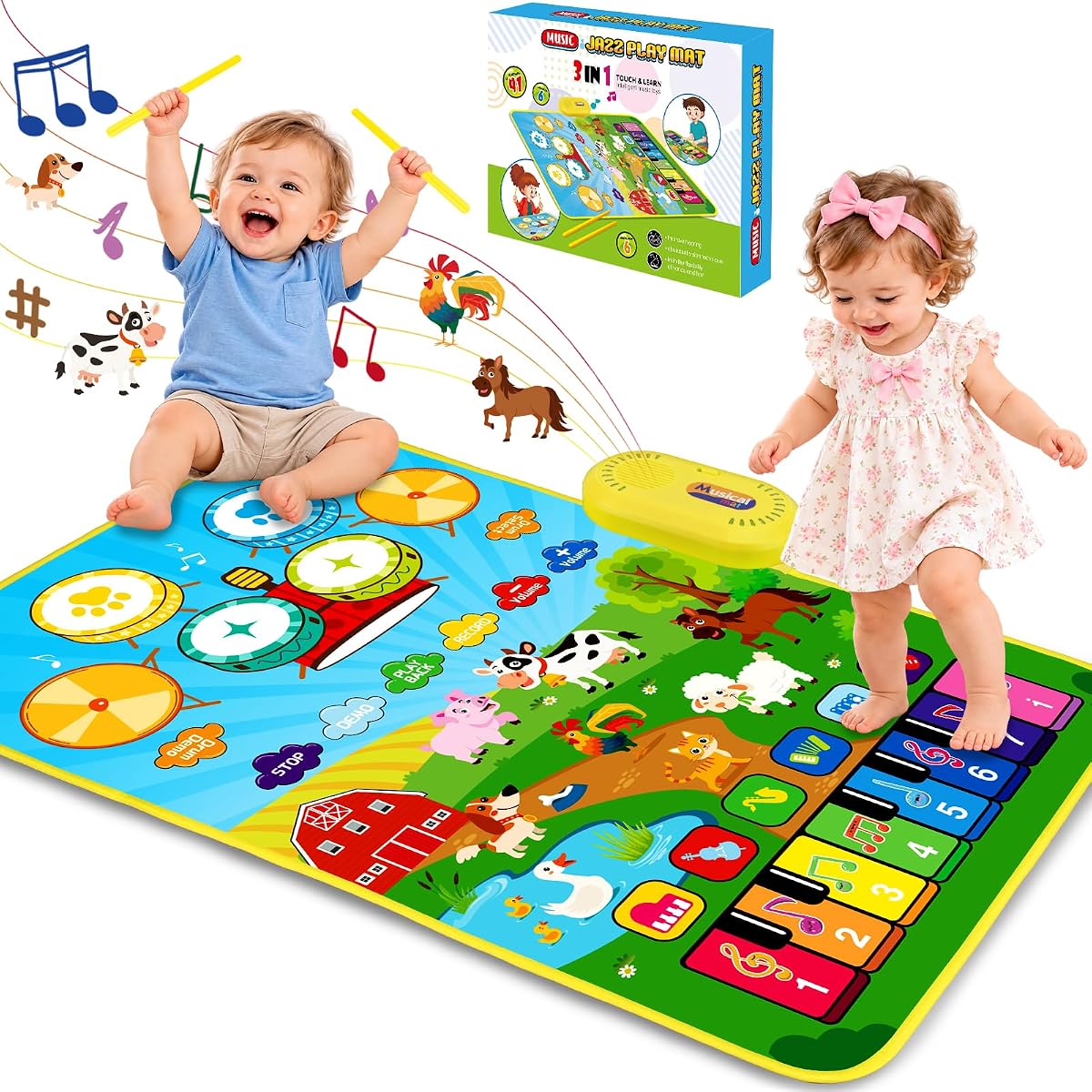
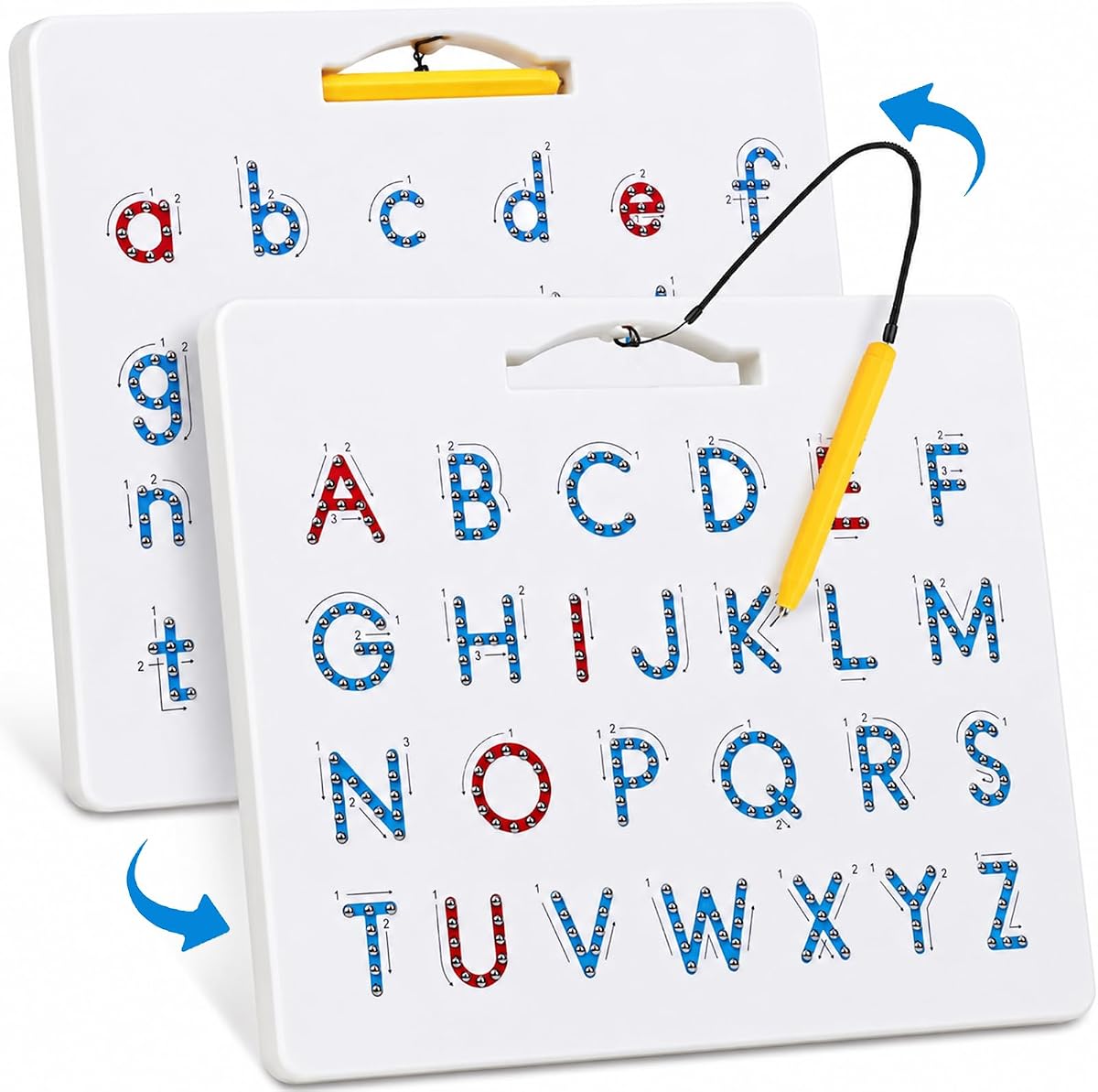
These two toys sit either side of a real divide. The music mat is for a toddler between one and three, in the stretch where the body is the main instrument: stepping on a piano key, hitting a drum pad with a stick, discovering that a foot in one place makes a trumpet and a foot in another makes a cow. The magnetic letter board is for a child of three and up who can hold a stylus and has started wanting to make deliberate marks.
What links them is control. Both hand the result to the child. The mat responds to any touch anywhere on its surface, so there is no wrong way to play it and nothing to set up first. The board traces with numbered arrows, so a child follows a stroke order rather than copying a shape by eye, and the beads reset with a push of the pen. Neither needs an adult to start it, which is the whole point.
The mat folds flat and the board is small enough for a tray table, so both travel. In our experience that is why they last: a toy that can be put away and brought out again stays interesting a good deal longer than one that is permanently on the floor.
From montessori baby toys at 6-12 months to the first toddler year
These two toys sit either side of a real divide. The music mat is for a toddler between one and three, in the stretch where the body is the main instrument: a foot on a piano key, a stick on a drum pad, the discovery that one place makes a trumpet and another makes a cow. The magnetic letter board is for a child of three and up who can hold a stylus and has started wanting to make deliberate marks.
Both are a step past the montessori baby toys a family buys at 6 to 12 months old, and the step is about control. Where an infant explores an object with hands and mouth, a toddler wants to cause a result and repeat it. The toys that work in the second year hand the result to the child and then get out of the way.
What a toddler is practising
- Cause and effect. Press, hear, press again. Forty times is normal and is not a sign of boredom.
- Gross motor and balance. Stepping deliberately onto a target is harder than it looks at fourteen months.
- Fine motor skills. Holding a stylus, tracing a line, pushing a slider back across a board.
- Sound and language. Naming animals, matching a sound to a picture, repeating a word that gets a response.
- Early letters. Numbered arrows give stroke order, which is the part of writing a child cannot work out by looking.
None of that requires an adult to run the toy, and that is the single quality we look for. A toy an adult has to operate becomes a toy nobody uses by the second week.
Why we did not fill this section with more
There is an enormous market in toddler learning products and most of it is the same toy in different plastic. We make two things here because two things cover the ground: one that answers the whole body, one that answers a hand. A child who has those, plus books, plus a shelf of real objects, is not short of anything important.
Both fold or pack flat, which in our experience is why they last. A toy that can be put away and brought out again stays interesting far longer than one that lives permanently underfoot.
Questions about the toddler shelf
Is a music mat a montessori toy?
Strictly, no. It has a speaker and it performs. It is honest to call it a cause and effect toy and to keep the rest of the shelf quiet, wooden and real.
When can a child start tracing letters?
Usually around three, and the sign is not age but grip. If a stylus is held in a fist, tracing is frustrating; if it is held in fingers, the board becomes absorbing quickly.
Can a younger baby use these?
A baby of ten or eleven months will enjoy patting the mat, and that is fine. The board is best left until a child wants to make marks rather than chew the pen.
What carries over from the baby shelf
A toddler does not need a new set of everything. Most of what worked at nine months keeps working: the wooden rings, the stacking blocks, the cup, the ball that rolls, the little mirror, the soft box of objects, the board books. What changes is what a child does with them. Where a baby filled and emptied, a toddler sorts, orders and builds, and the same kit supports both halves of that development.
What to add is narrow. A puzzle with three or four pieces, because by now a shape can be matched to a hole on purpose. An egg and cup set, which stays interesting far longer than it should. Something to pull along, because a child who can walk wants an object that follows. A set of large wooden beads to thread, which is the clearest fine motor and coordination work there is. That is the whole list, and none of it is a sensory toy in the marketing sense.
We would also encourage keeping one thing from the baby year on the shelf untouched. Kids come back to objects, and a toy mastered at ten months is often rediscovered at two with a completely different purpose. The wooden ball becomes a thing to roll down a slope, the mirror becomes a prop for pretending, the box becomes a garage. Quality shows up here, in whether an object survives being reinvented. A toy that only promotes one trick is finished the week the trick stops being new.